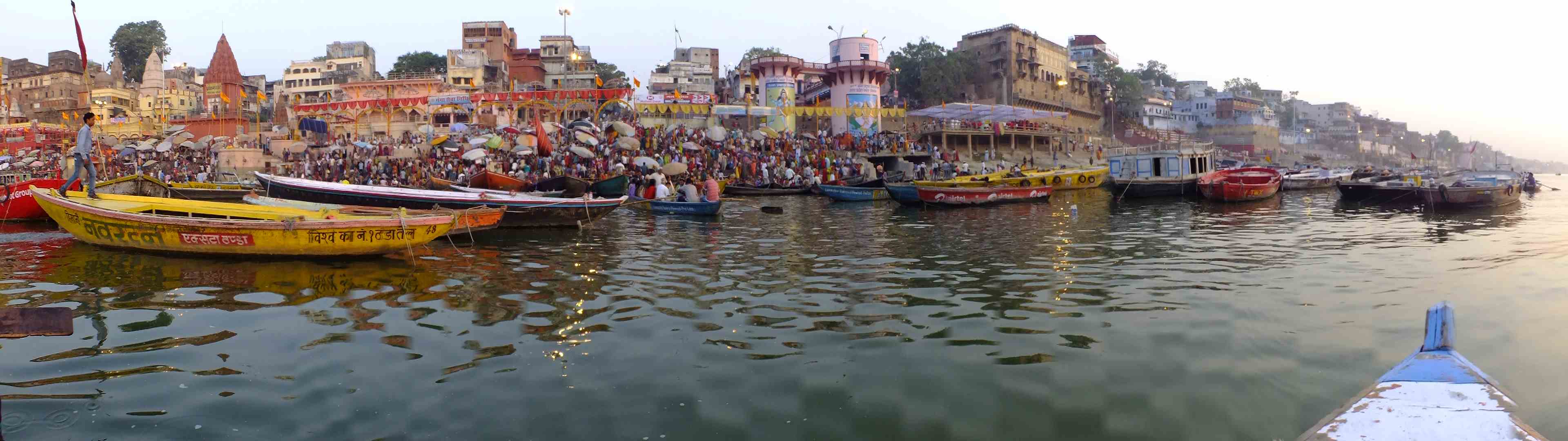
Over a period of time, many cities grew and developed on the banks of the holy river, Ganges. Two head streams, Alaknanda and Bhagirathi merge together at Devprayg to give birth to Ganga. From the great Himalayas, the Ganges descends on the plains in Haridwar. Haridwar is an important and holy center of Hindu pilgrimage and one of the four venues of the Kumbha Mela (the other three being Ujjain, Prayag and Nashik). Thousands of Hindu pilgrims gather at Haridwar to take holy dip in the Ganges on pious occasions. Other important cities on the Ganges include Kanpur, Allahabad, Varanasi and Patna. Of these cities Allahabad or Prayag and Varanasi hold great significance for the Hindus.
Prayag (Allahabad) is also an important pilgrim center for the Hindus and one of the four venues of the great Kumbha Mela. River Ganga and River Yamuna merge at Prayag (Sangam or union). Perhaps the most popular and venerated of all the cities located on the banks of river Ganga is Varanasi. Varanasi is also known as Kashi or Benaras. Varanasi is considered as the cultural capital of India and attracts thousands of Hindu pilgrims and visitors from all parts of the world. Varanasi has been a traditional center of learning of philosophy, Sanskrit, astrology and religion.